GPSChianti
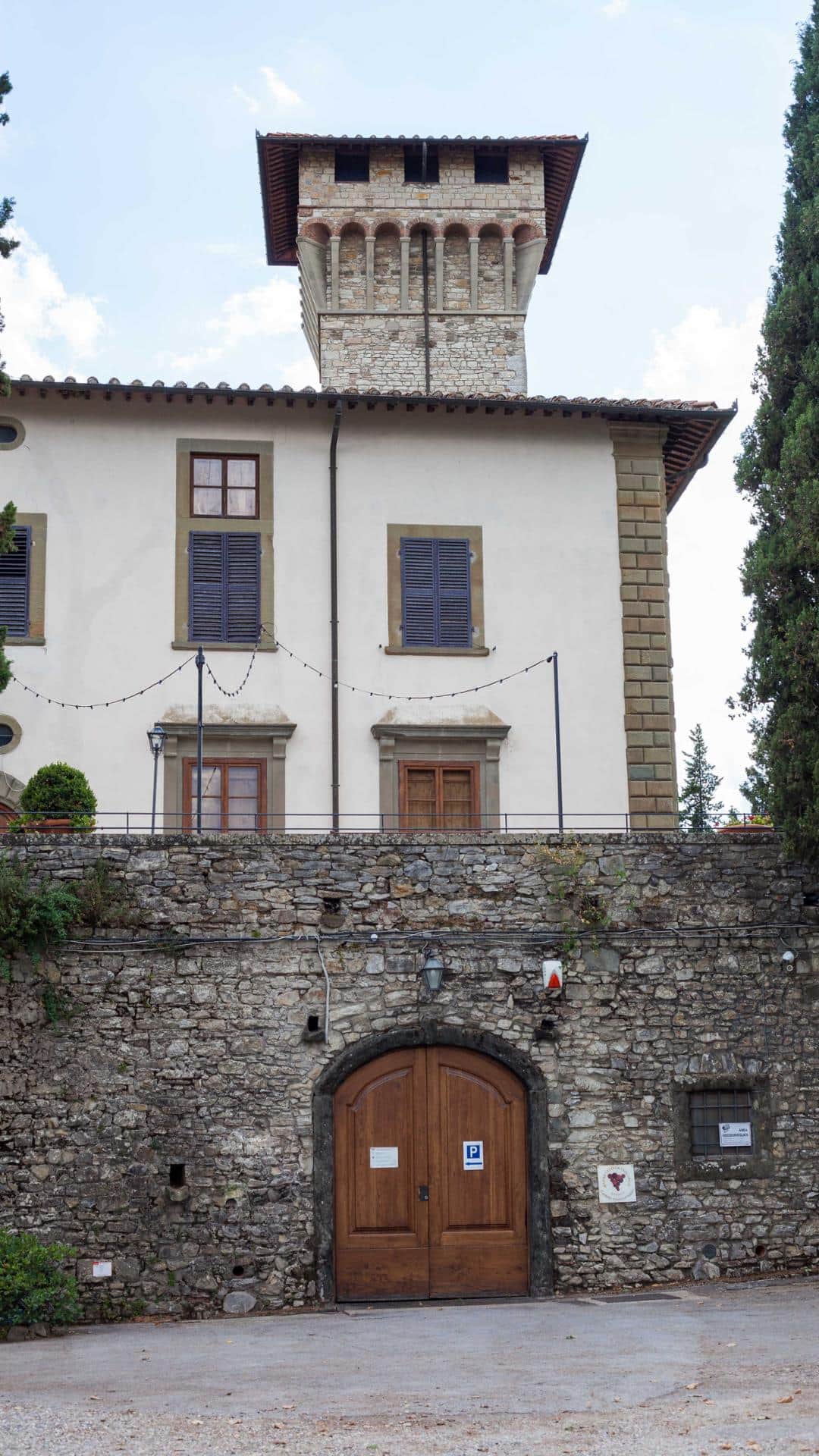
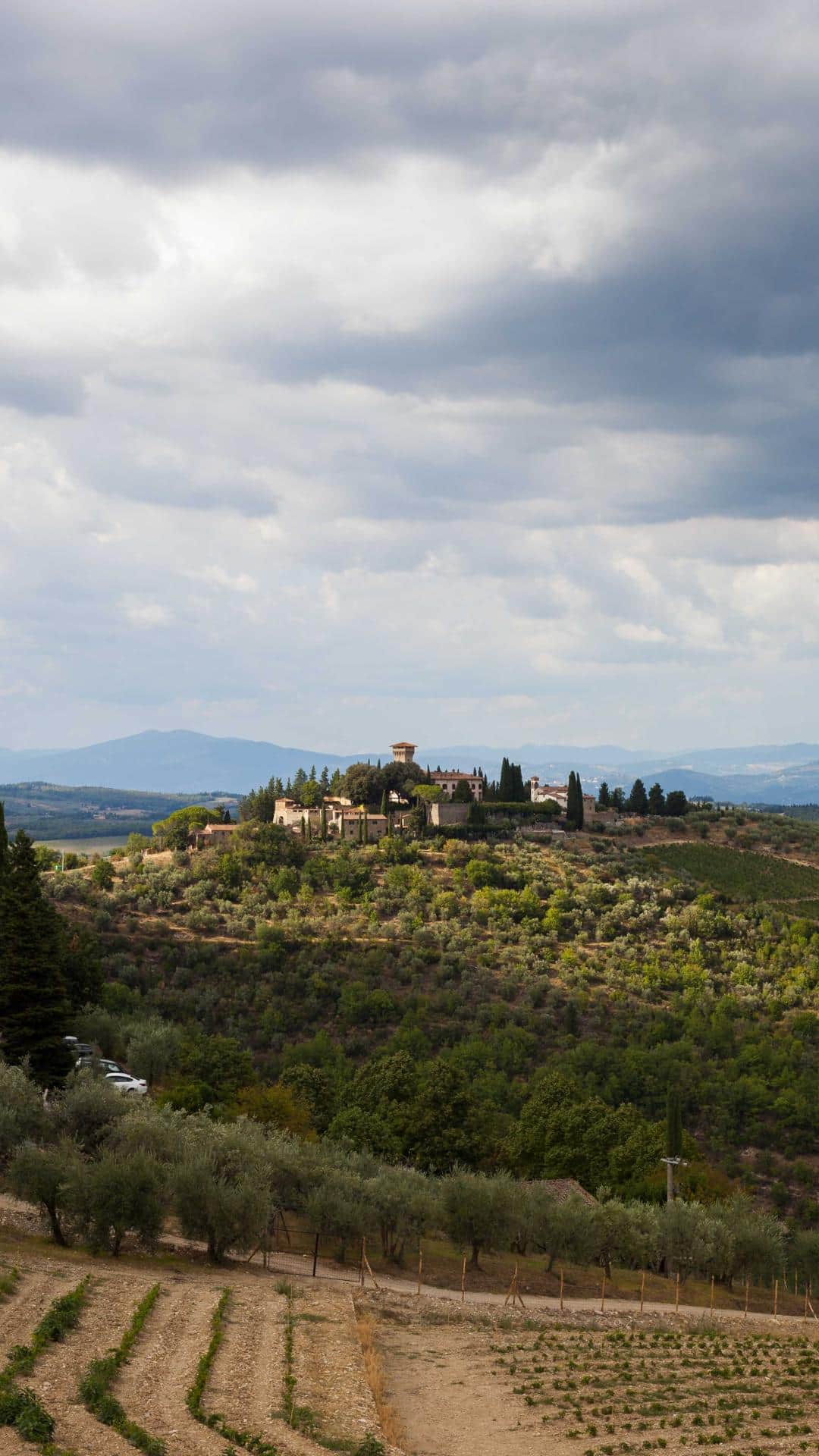
The castle of Vicchiomaggio is located in the town of Greve in Chianti.
The History
The origins of Castello Vicchiomaggio, initially called Vicchio dei Longobardi, date back to about 1400. Its location on top of a hill dominating all of Greve valley proved, especially in the Middle Ages, a highly strategic position and allowed the castle to play a fundamental role in the defense of Florence in the conflicts with Siena.
In the second half of the thirteenth century, suffered heavy damage that resulted in a progressive depopulation.
In 1320 in the castle were reported only abandoned buildings and spaces not built: this explains the subsequent transformation into a residence of the Florentine family of Gherardini and then the Scolari; to this period refer to the defense tower and the inner court.
Later it took on the character of a Renaissance villa, reaching its maximum splendour.
The Villa
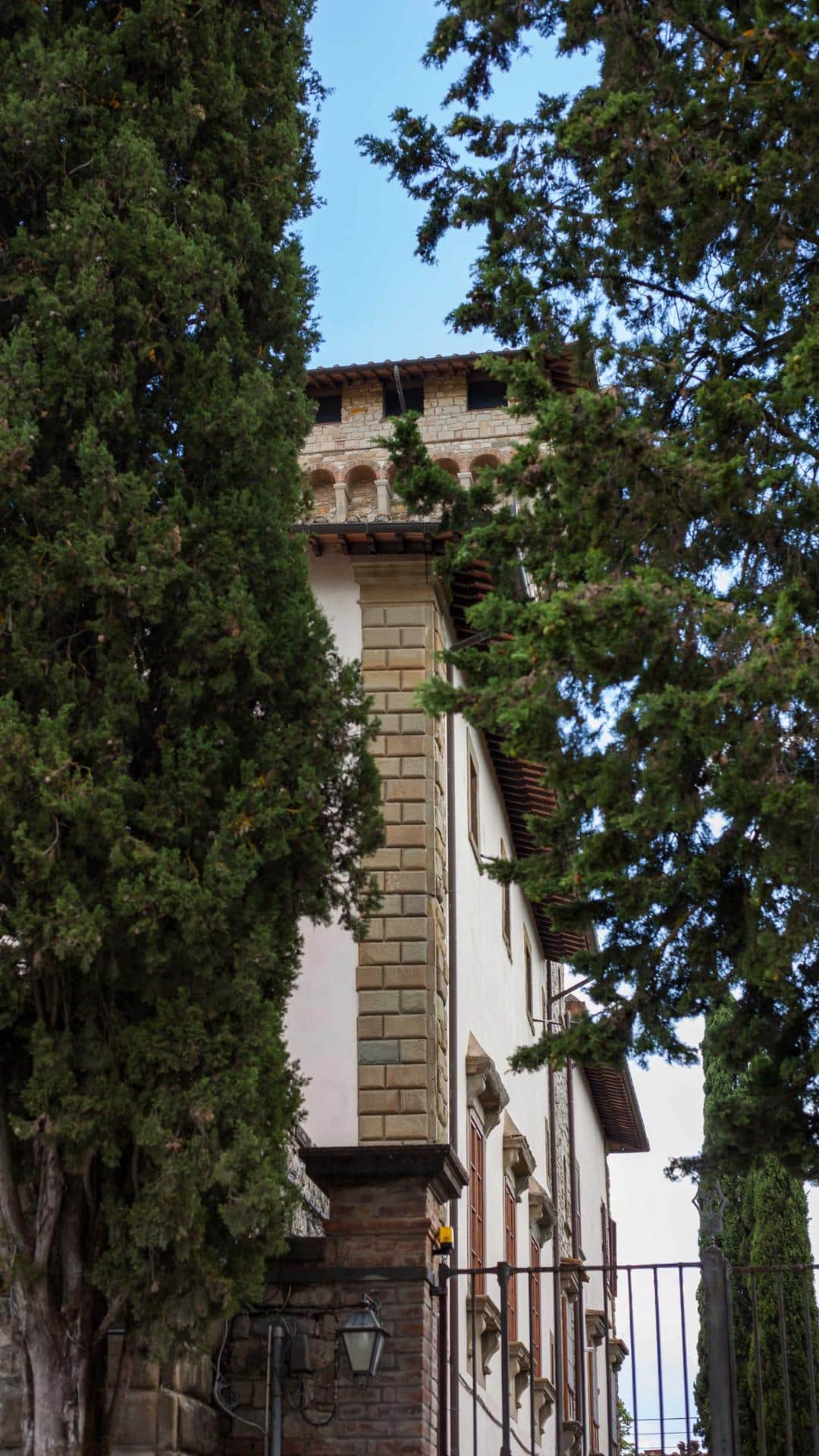
The Vicchiomaggio Castle, built in solid stone whose fulcrum is the high crenellated tower, preserves surrounding castle houses and defense walls. Thanks to careful and meticulous restoration, it is now perfectly preserved and has been recognized as a national monument.
In its long and glorious history, numerous personalities have stayed at Castello Vicchiomaggio, including Leonardo da Vinci and Francesco Redi.
The first stayed there during the period in which he was painting his masterpiece, the Mona Lisa, drew a majestic and imposing drawing that we find still today among his personal papers; the second, academic of Crusca, Here he composed the verses of his opera Il Bacco in Toscana in 1865. In 1964 the Vicchiomaggio estate was bought and restored by Federico Matta who came from Tonengo, near Asti in Piedmont, but he had moved to London and entered into business in the early fifties importing French and Italian wines.
His son, John Matta, took care of the estate with his wife from 1982, investing in the production of wine and obtaining numerous awards.
Interesting Facts
It was in the Renaissance period that, at the original name Vicchio, was postponed the word May, in memory of the "maggiolate", the traditional song of idyllic-loving characteristic, linked to the spring festivals of May.

Information

Nearby

No related places available