GPSChianti
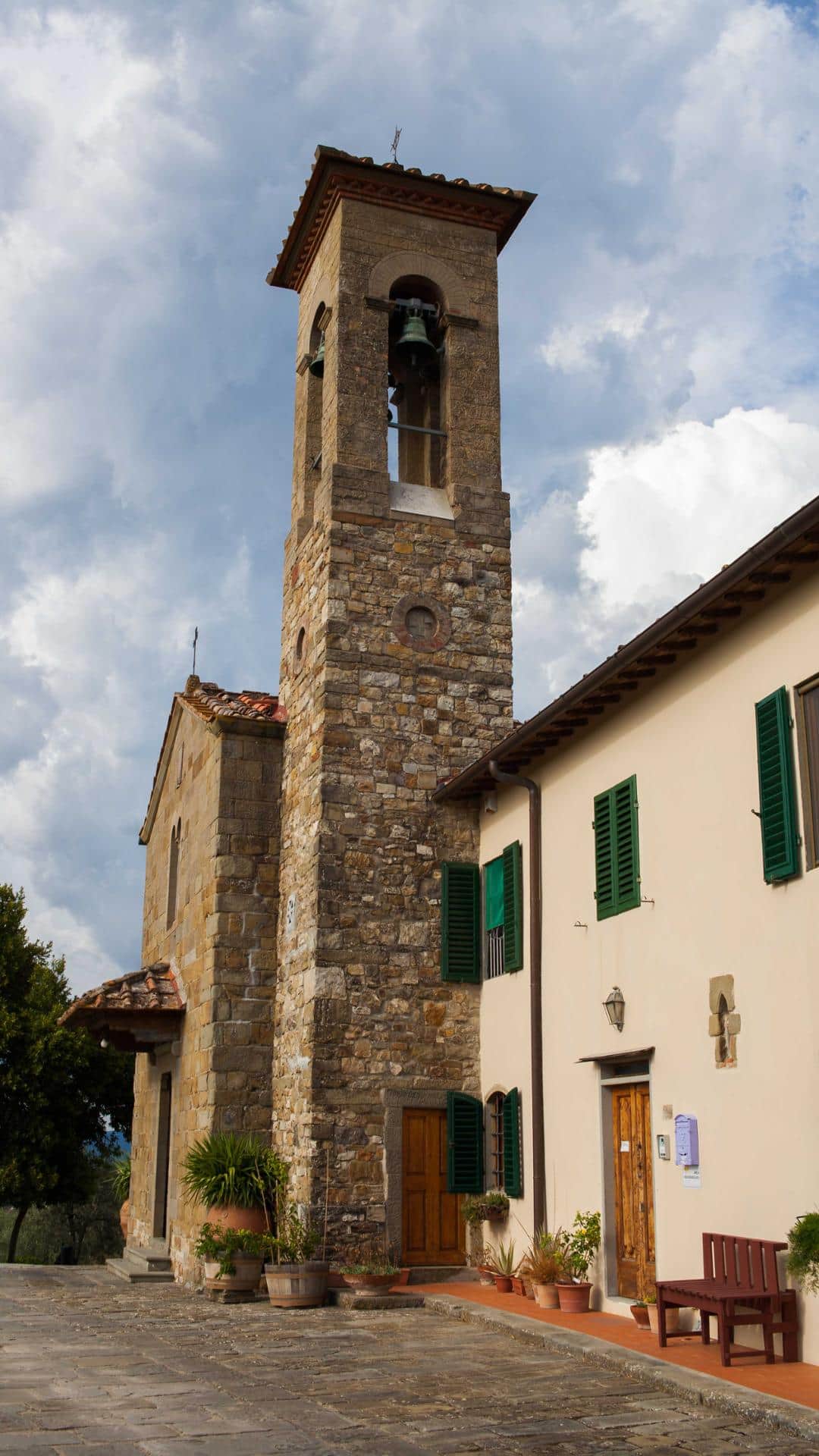
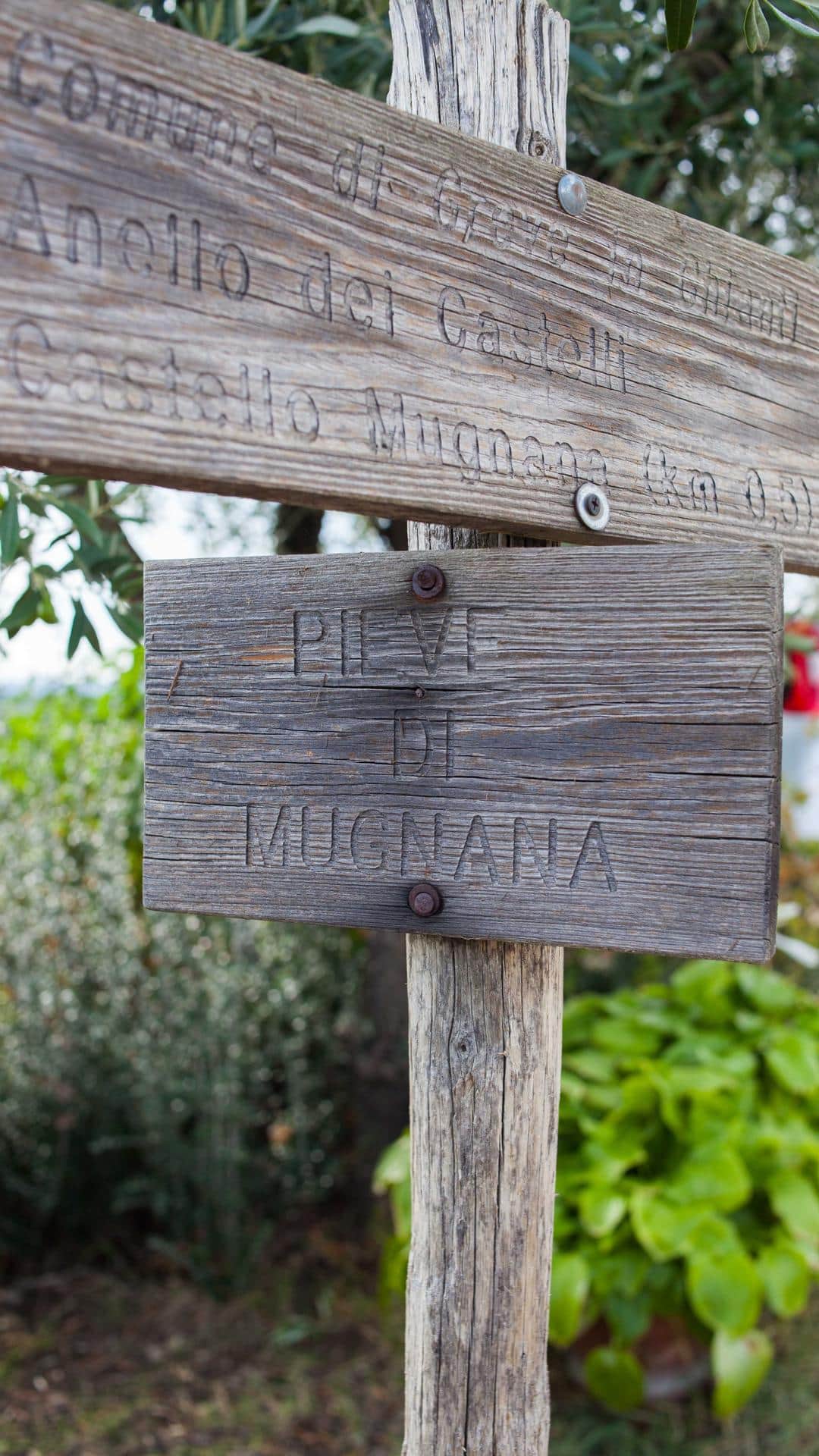
The Pieve di San Donato a Mugnana is located on top of a hill near Chiocchio, a small village in the hamlet of Greve in Chianti. The origins of this church date back around the year 1000, when the land on which it was built was owned by the Bardi family of Vernio, famous for being the trusted bankers of the Medici family as well as owners of the Castle of Mugnana. Over the years the church has undergone many changes and renovations that have led several times a conversion of the original style with which it was designed. From here you can enjoy a beautiful view of the hills of Chianti in complete tranquility thanks to its position.
Structure and Works
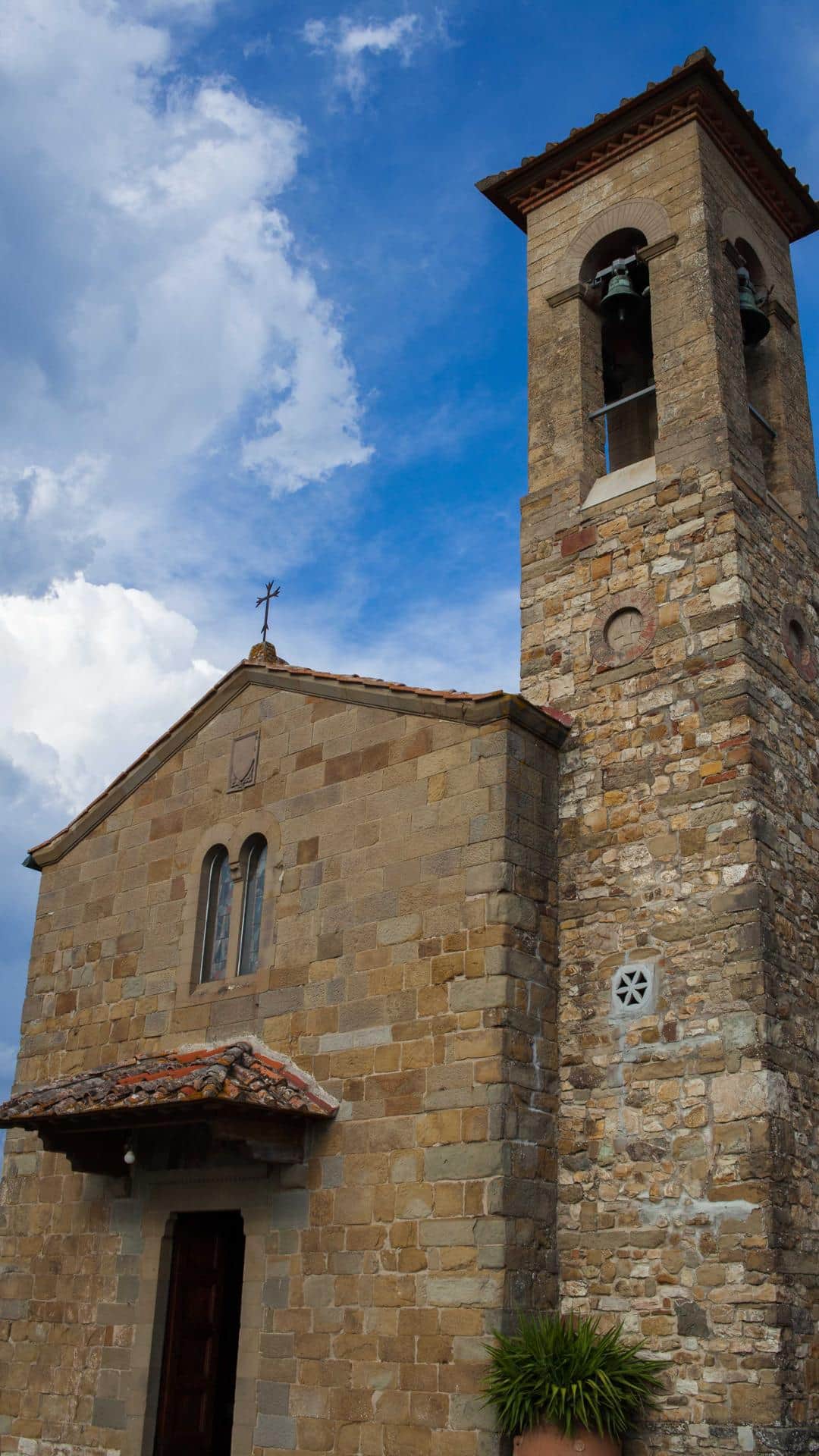
The external structure of the church is quite simple; the facade is in neo-Romanesque style, after the last renovation in the '30s, enriched only by a lunette depicting the Madonna and Child. On its right you can see the bell tower, also these in neo-Romanesque style. Inside it has a single nave, in which you can find many interesting works such as the representation of the Way of the Cross; the altars in serena stone placed along the side walls; numerous frescoes representing many saints (Santa Margherita, Sant'Ambrogio, Sant'Agostino, San Bernardo, San Francesco di Sales, San Giovanni Bosco, San Girolamo and San Gregorio) of which unfortunately we do not know the author; a wooden bust of San Donato; some reliquaries of the eighteenth century that are located in the sacristy.The origins of the Pieve date back to the thousand years, as well as the nearby castle of Mugnana, under the ownership of the Bardi family. Since the first centuries of its life this church has been the protagonist of many changes of style; already during the ‘300 the church was modernised in Romanesque style, and then underwent further changes during the seventeenth century when a reconstruction was carried out that pushed it towards a Baroque style. Subsequently there were two other important interventions, in 1843 and 1934, which have retraced the style of the parish church bringing it back to a neo-Romanesque character designed by Raffaello Franci who was a Franciscan friar.
Visit the Church

Information

Nearby

No related places available