GPSChianti
Navigator, born around 1485, from a good family, at the Castello di Verrazzano, which is located on a hill above the Val di Greve, not far from Greve in Chianti. His name is sometimes spelled Verrazano.
History
After joining the naval service of Francis I of France, he soon became famous as a privateer, preying on the ships of Spain and Portugal. One of his trophies was in 1522 the treasure ship, loaded with Mexican gold and silver, which Cortés had sent to Charles V. In January 1524, he began a voyage of discovery to the New World on behalf of his patron Francis I, during which he kept a diary. In 1556 Ramusio published in his collection of travels a letter in which Verrazzano spoke of his journey on the coast of North America and his exploration from 30 degrees to 50 degrees north of latitude. This is the earliest post-Columbian description of the North Atlantic coast and includes the earliest description of the New York Bay and present-day Hudson River. He later sailed along Long Island Sound to Block Island and Newport, which he mentions. On the basis of this travel diary, his brother Girolamo drew in 1529 a map of the North Atlantic coast, now preserved in the Propaganda Museum in Rome, which testifies to the accuracy of Giovanni's observations along the coast up to the current State of Maine. Verrazzano undertook two more trips to America. In 1527 he commanded a fleet on an expedition to Brazil that allowed France to profit from dyeing wood. His final voyage began in the spring of 1528, when with his brother Girolamo he left Dieppe with two or three ships. The fleet touched Florida, the Bahamas and finally the Lesser Antilles. He anchored the ship off the islands (probably Guadeloupe), landed and was captured, killed, then eaten by cannibals.
The monument
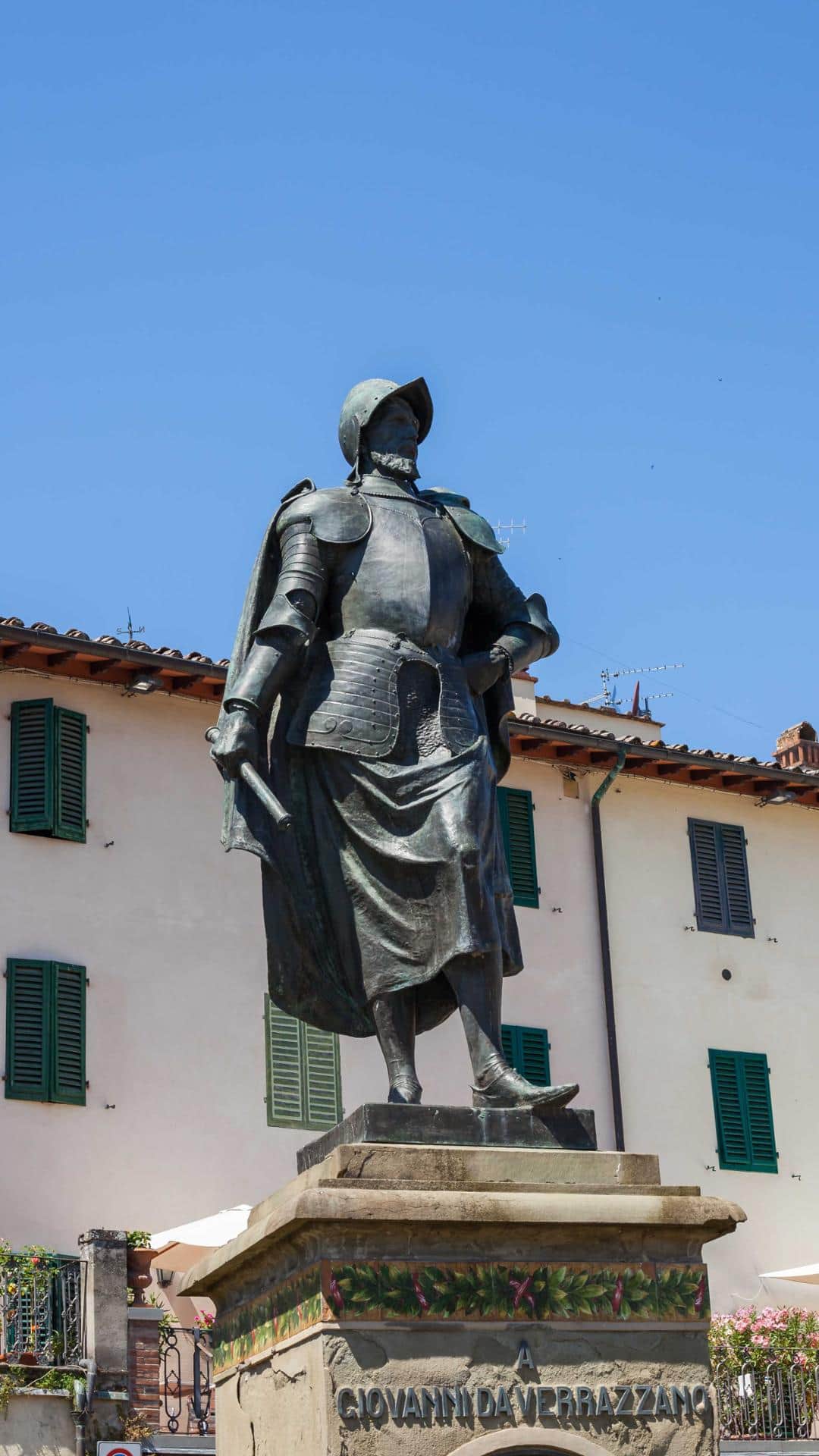
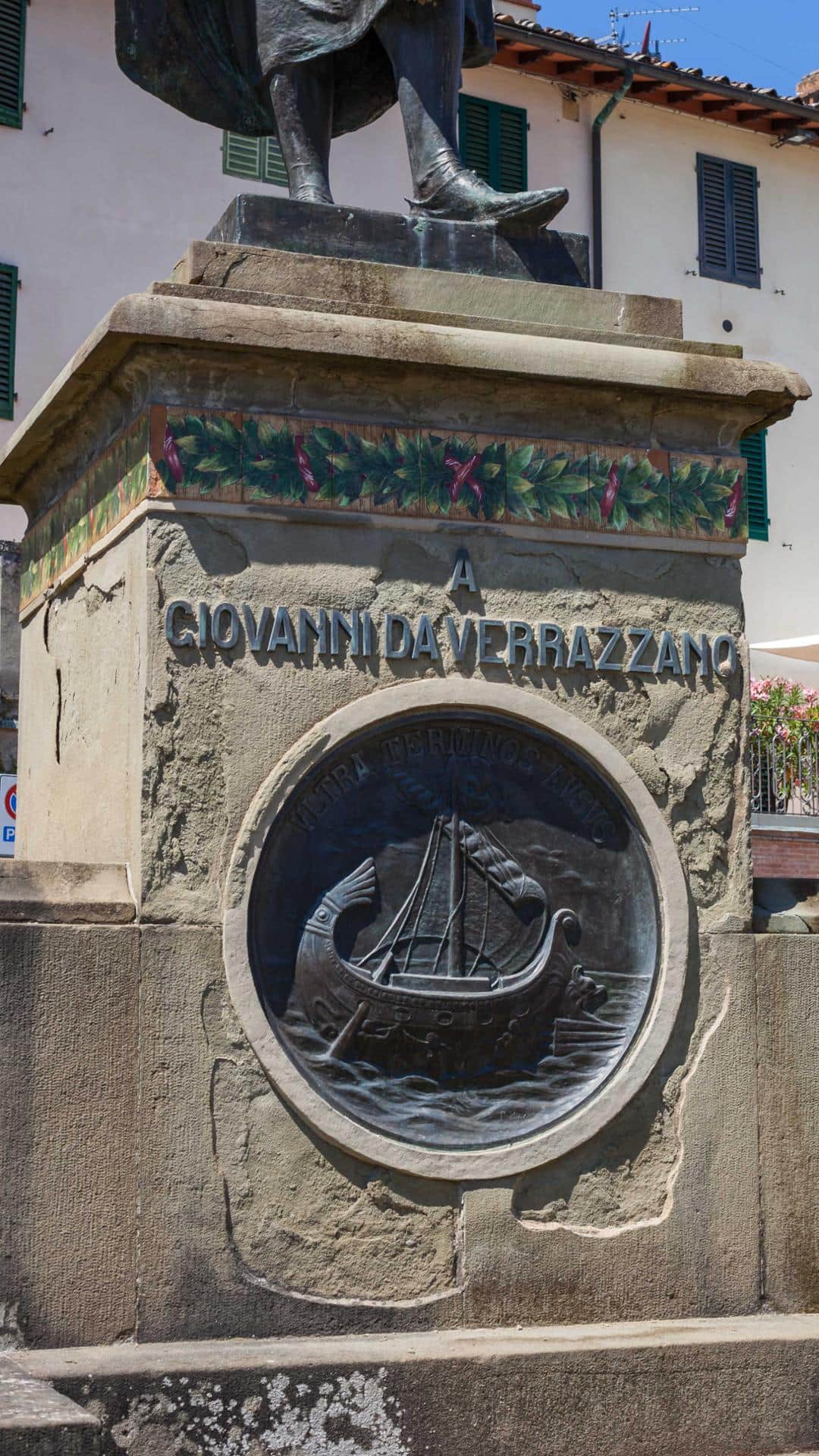
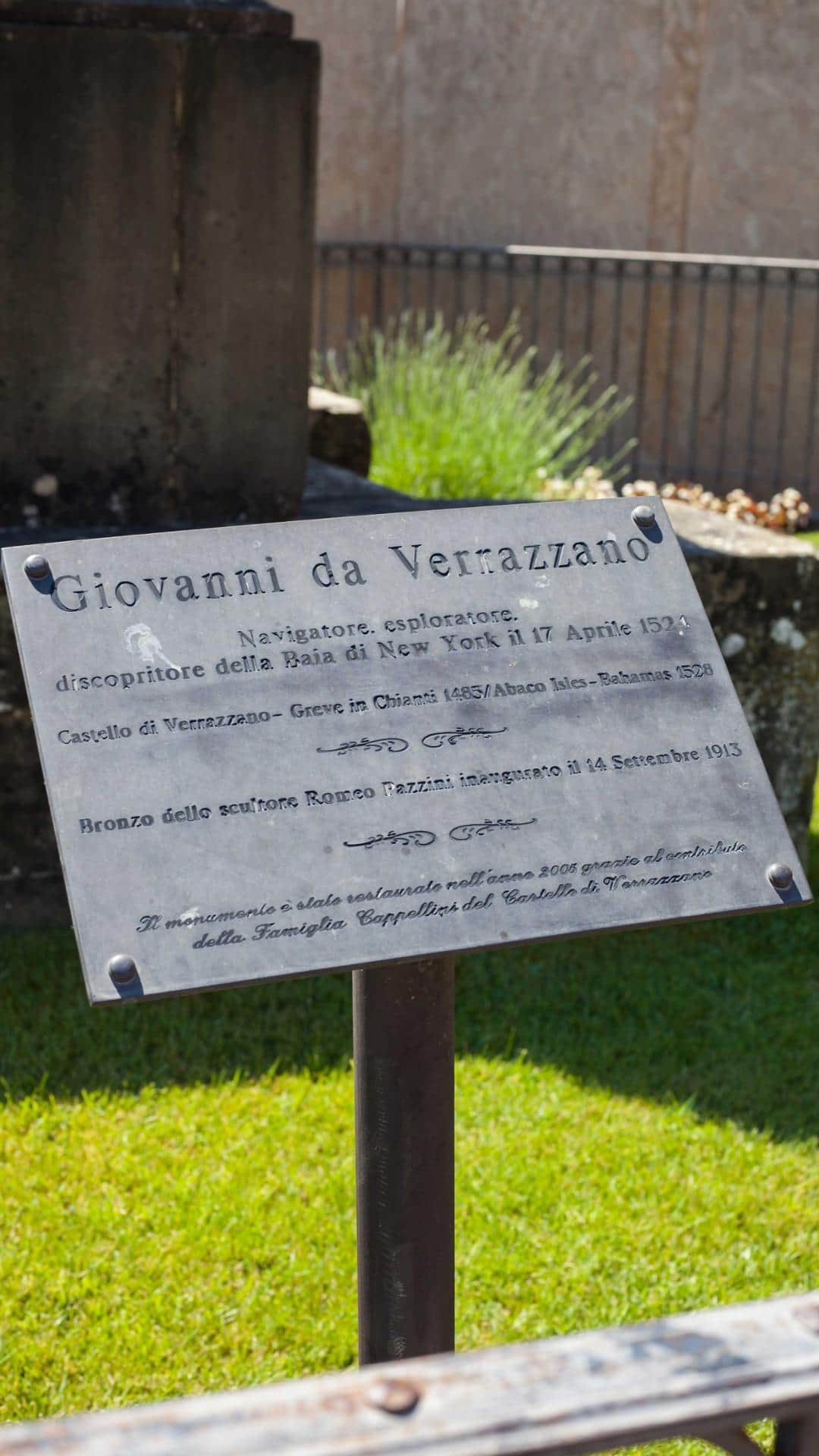
The main square of Greve in Chianti, Piazza Matteotti, is dominated by an elegant statue of the navigator. The monument of Romeo Pazzini was inaugurated on 14 September 1913 in the main square of Greve in Chianti. The statue was made with contributions from the municipalities of Florence, Genoa, Siena, Rimini, Prato, Greve and King Vittorio Emanuele III. The Minister of the Navy donated the bronze from the La Spezia shipyard. The Greve stonecutters of the Stone Working Society of the Piombino quarry, near Greve, donated the stone. The base was designed by cav. Carlo Baglioni, engineer of the Municipality of Greve. The monument was restored in 2005.
Source

Information

Nearby

No related places available