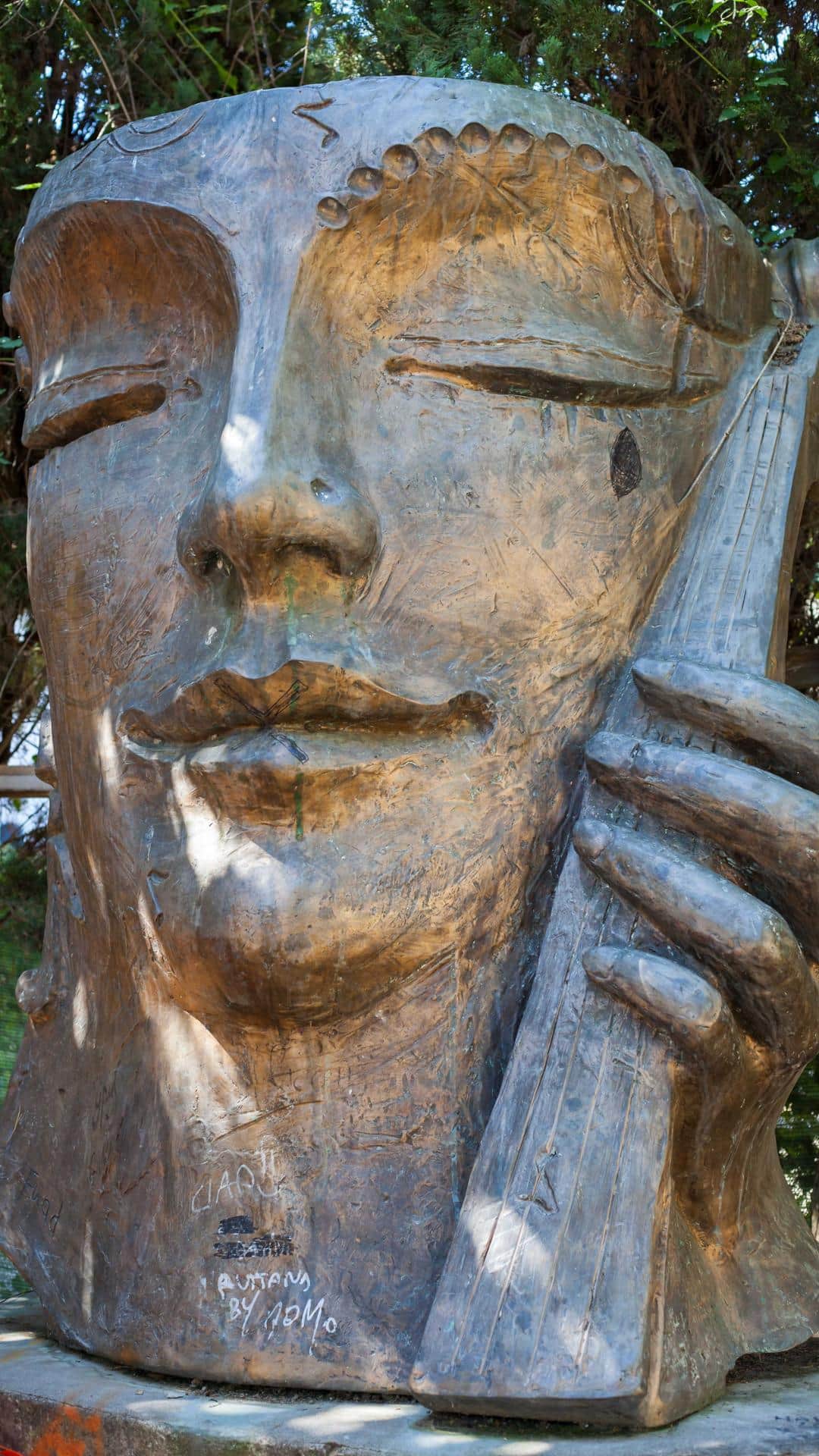
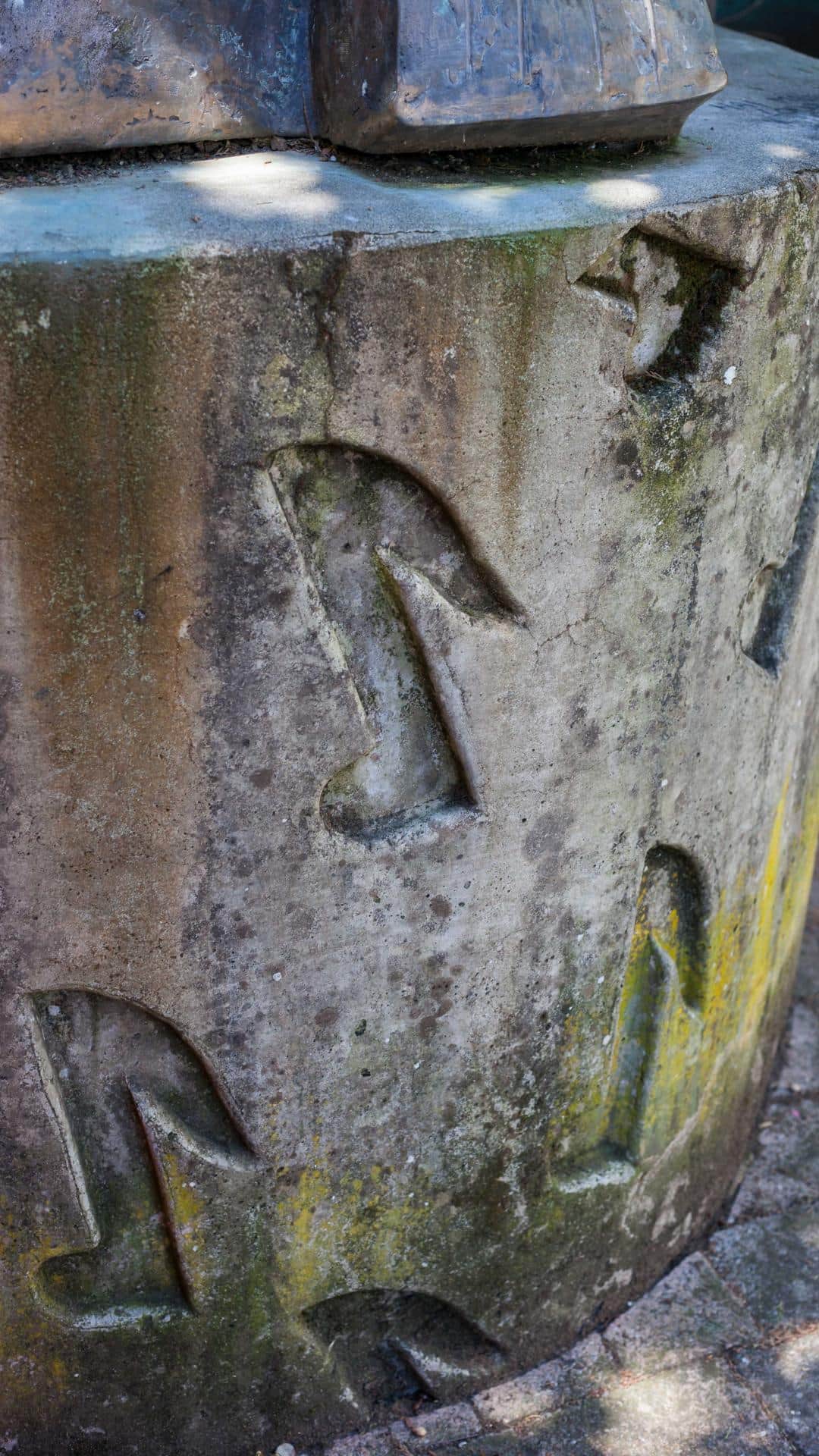
The work of Fuad AZIZ present in the historic center of Greve, proposes a creation of proud artistic authenticity. The sculptor shows us his recurring obsession with the Eastern Greek 'woman-form' which affirms itself beyond geographical borders, as the result of an encounter between two cultures.
The work of Fuad AZIZ in the historic center of Greve proposes a creation of proud artistic authenticity. The sculptor shows us his recurring obsession with the Eastern Greek 'woman-form' which affirms itself beyond geographical borders, as the result of an encounter between two cultures.
In his work there is often a reference or a reference to music as in the "Flute players" the work of Monsummano Terme, or in his storybook "The Journey of a Cello", where in the story music is synonymous with freedom .
The artist is a sculptor, painter, inventor and illustrator of fairy tales. Fuad is always on a journey aimed at finding a balance between forms and the fairy tale, in search of freedom. The art critic Giovanni Carandente underlined how the figures he shapes and then engraves with streaks are reminiscent of the form of ancient Assyrian art.
A head of his, intense in expression, hieratic in posture, is as if sculpted by a network of deep furrows, a symbolic reference, perhaps to the condition of prisoner freedom. Fuad, a very sensitive colorist, in his linear and lucid sign, re-elaborates the haunting memory of an exile. He re-proposes, internalizing them, the moments that most succeed in hinting at the outcome or almost the passion for life, customs, but above all for the ancient civilization of his own people.
Born in Arbil in Kurdistan (Iraq) he attended the Baghdad Academy of Fine Arts in 1974 and the Florence Academy of Fine Arts in 1978, where he still lives and works. The exhibition activity begins in 1972 with the first solo show in his hometown and then continues in Italy and France. He has been present in many personal and group exhibitions in Italy (Milan, Florence, Ferrara, Rome] and abroad (London, Graz, Paris, Damascus). In 1982 he obtained the First Prize at the International Symposium of Sculpture on Marble in Carrara. He has created numerous permanent works including the mural in the Borgo San Lorenzo hospital, the "Flute players" in Monsummano Terme and the "Sole" in Scandicci.
No related places available