GPSChianti
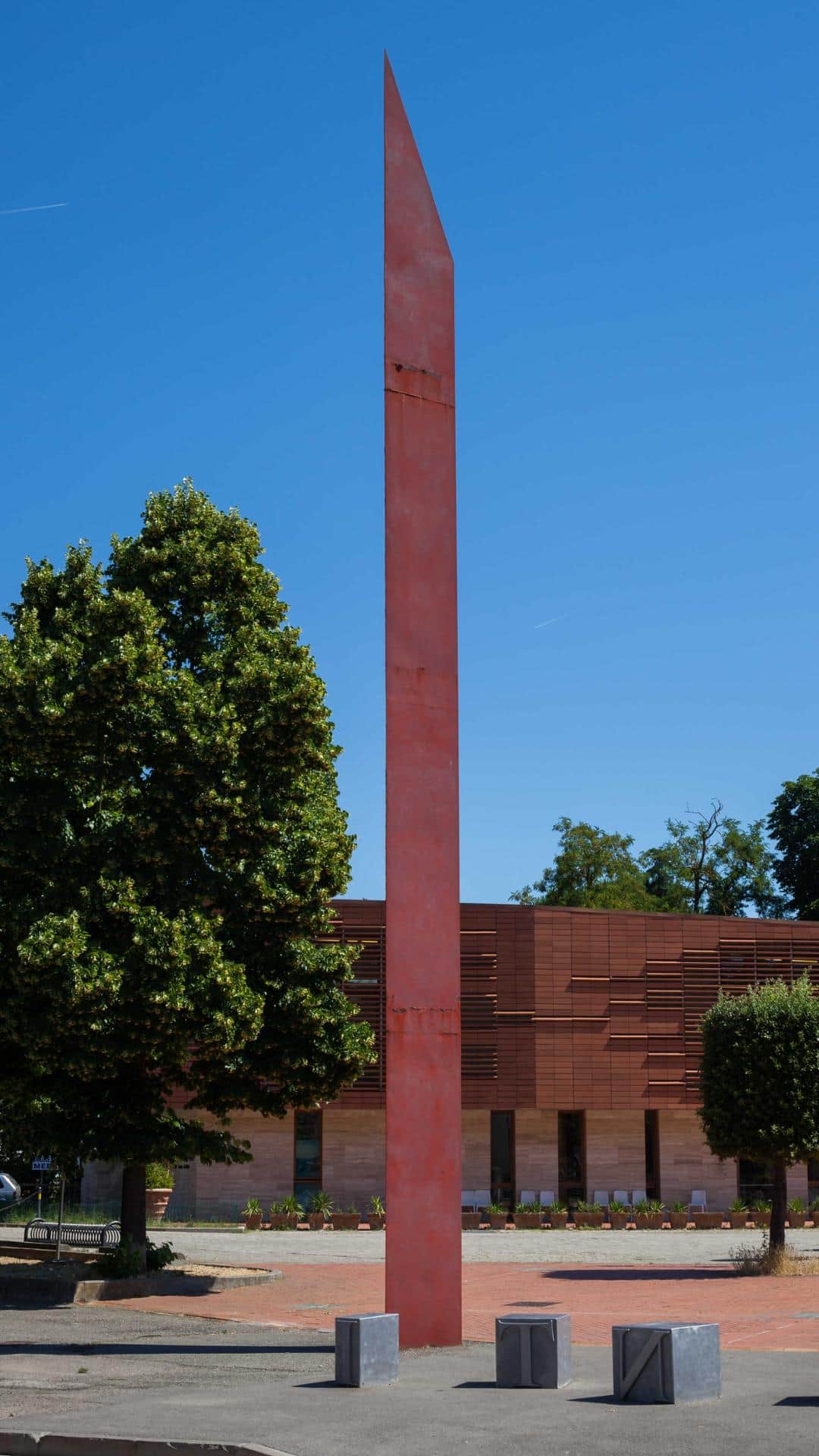
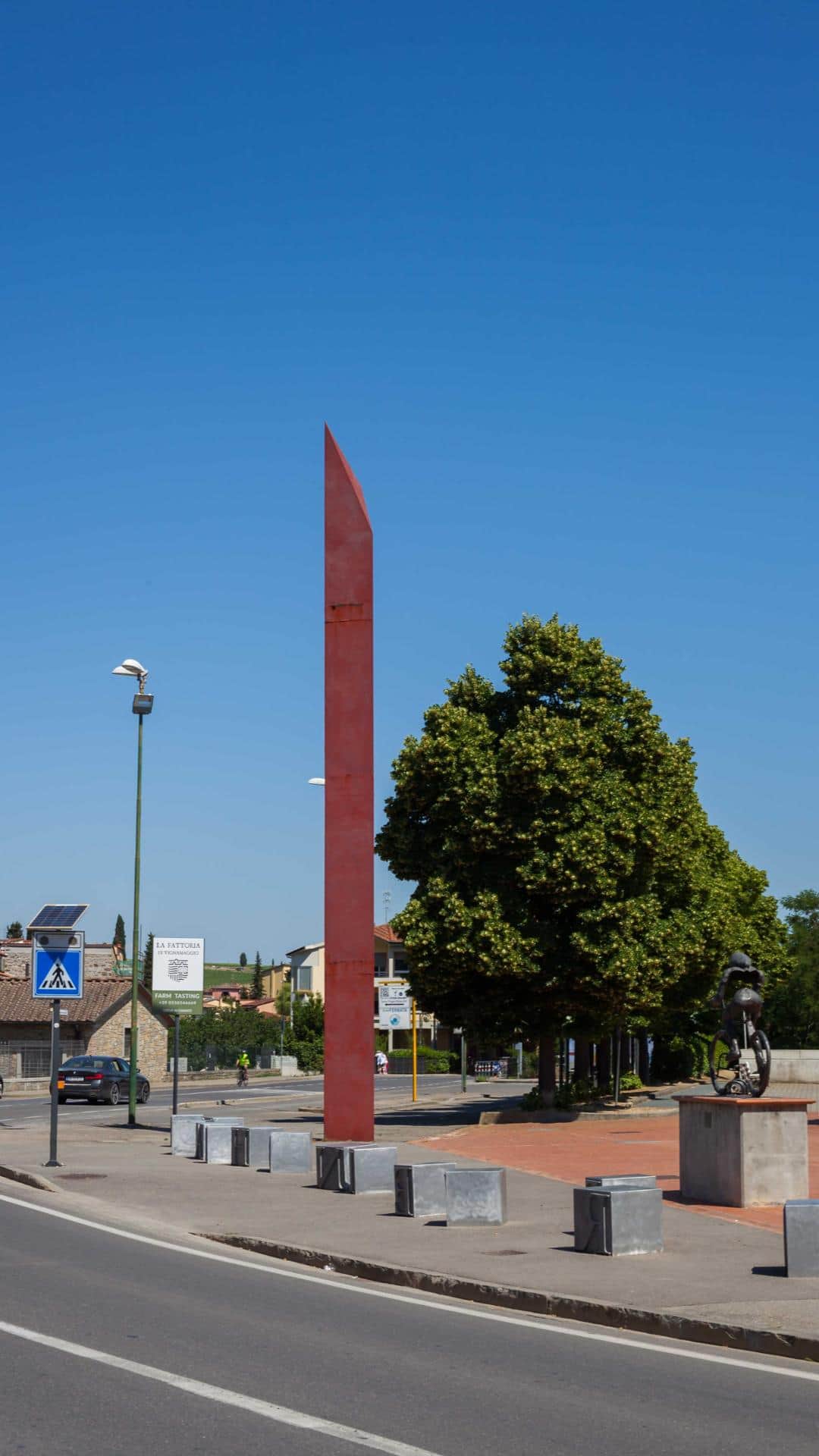
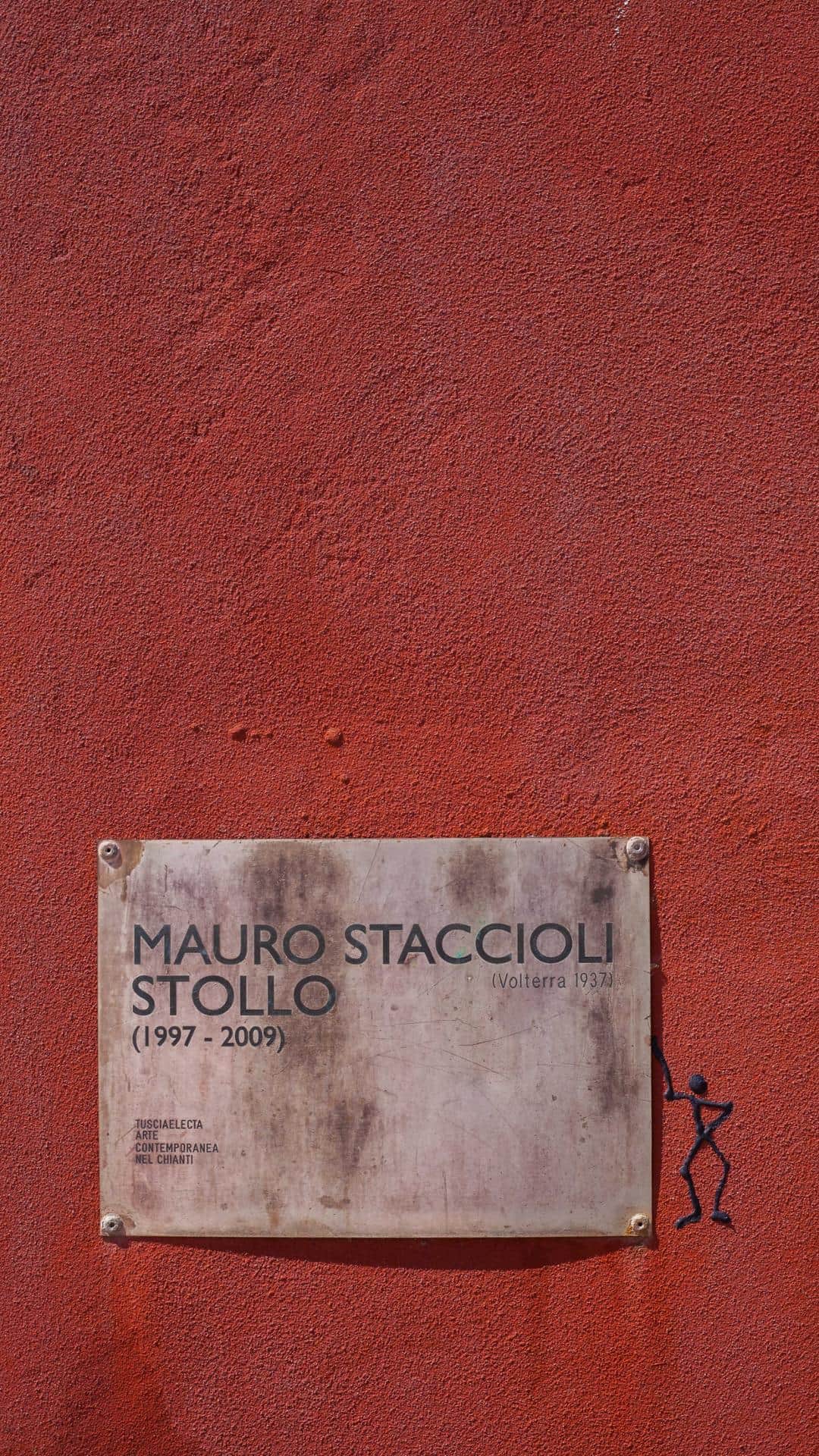
Mauro Staccioli's work, "Stollo", was created in 1997 for Greve in Chianti on the occasion of the "Tusciaelecta" exhibition which since 1996, the year of its first edition, has hosted more than thirty artists, inviting them to visit the Chianti villages and to design works that intervened in the territory. Following a restoration work by local workers, the sculpture by Mauro Staccioli is relocated, in its final form in 2009, in its current position. Since the 1960s, Staccioli's works have been characterized by their strong link with the physical space aimed, at the same time, at reinterpreting both the form and the history of the place.
The author
One of the first sculptures conceived on an urban scale, is the one designed for the city of Volterra in 1972, followed by the others for the Volterra 73 exhibition. The placement of the works is suggested to the artist by the environmental context, meaning the landscape as a whole. , both artificial and man-made. For Staccioli the practice of sculpture is the result of the encounter, dialogue and interaction between the work and the environment because, as the artist says: "to create sculpture means to exist in a place". Mauro Staccioli was born in 1937 in Volterra and graduated from the Art Institute in 1954. In 1960 he moved to Sardinia where he began teaching in the province of Cagliari and founded, together with young Sardinian artists and intellectuals, the Group of Initiative.
Works
After a series of exhibitions organized in Milanese galleries and spaces (Studio Sant'Andrea, Studio Marconi, Galleria Bocchi) he participated in the Venice Biennials of 1976 and 1978. In the eighties he took part in the works in the Fattoria di Celle in Santomato di Pistoia where initiates a fruitful dialogue between sculpture and the natural environment. In 1988 he created the sculpture for the new Luigi Pecci Center for Contemporary Art. In the same year he participates in the International Sculpture Symposium organized in Seoul on the occasion of the Olympic Games, creating an enormous sculpture for the square of the Olympic Park. From the nineties to today Staccioli continues to produce sculptures and installations in Europe, America and Korea, developing other themes such as suspended balance, dynamism in time and space, the relationship with both the natural and urban environment, and the interpretation of historical places.

Information

Nearby

No related places available