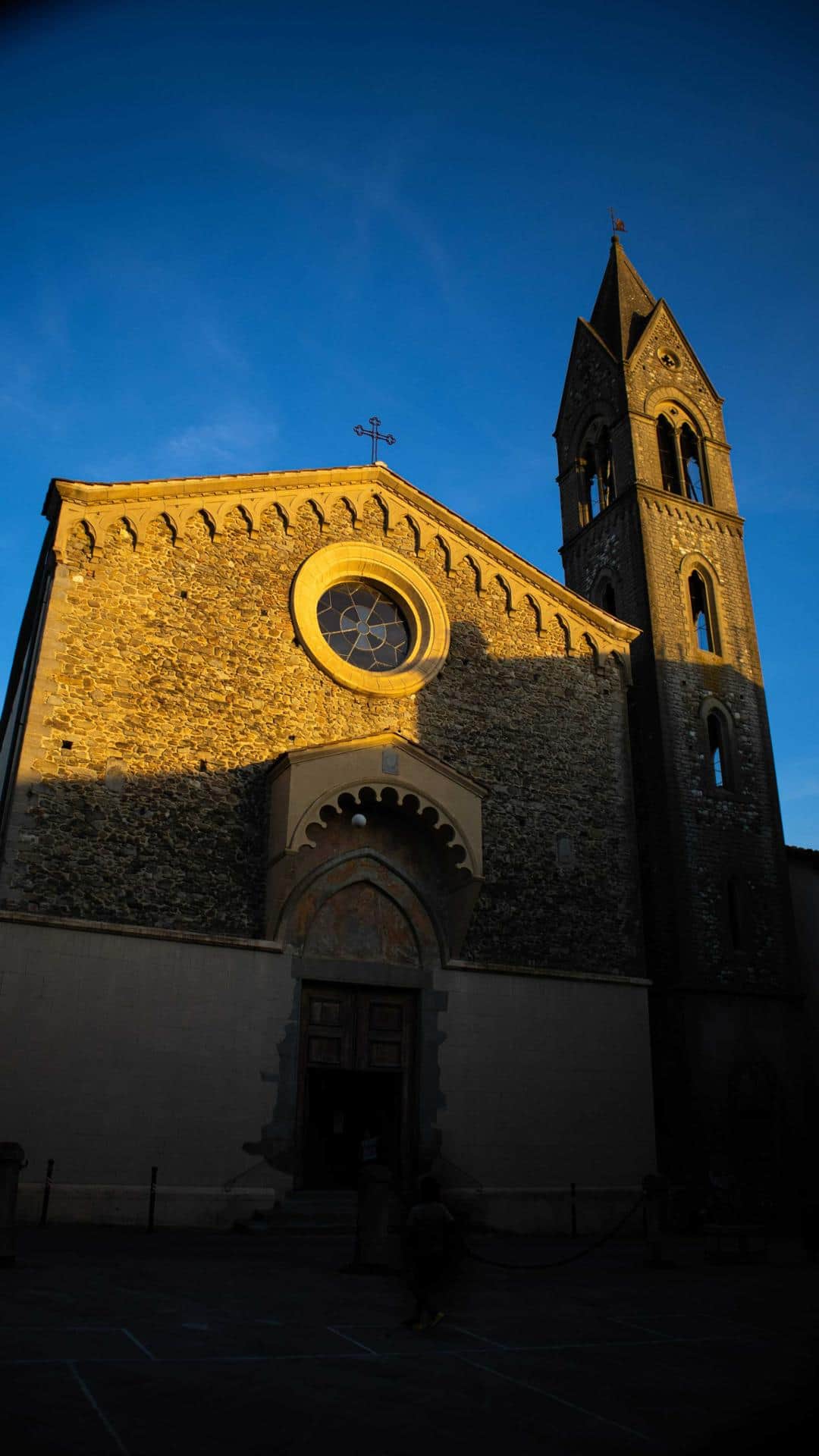
The church and convent of San Barnaba (now the Propositura dei Santi Jacopo e Filippo) in Scarperia stand right in the center of the town and face the square, opposite the Palazzo dei Vicari.
The church and convent of San Barnaba (now the Propositura dei Santi Jacopo e Filippo) in Scarperia stands right in the center of the town and faces the square, opposite the Palazzo dei Vicari.
Structure:
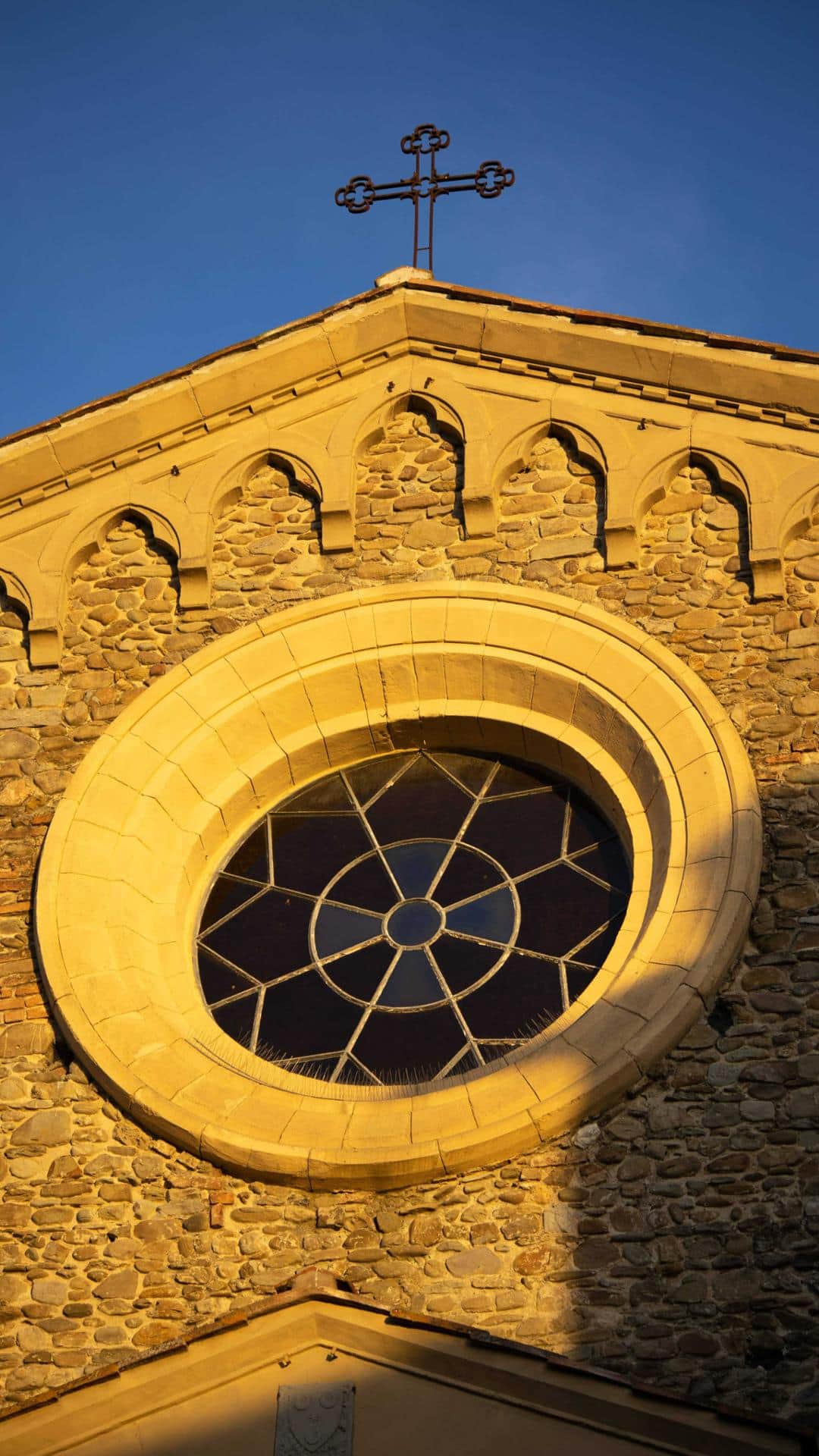
The present conformation has a gabled facade with the lower part plastered and on which opens an ogival portal similar to the one in the church of S. Francesco in Fiesole. A central oculus opens in the center of the facade, while a crowning of blind arches runs along the two slopes.
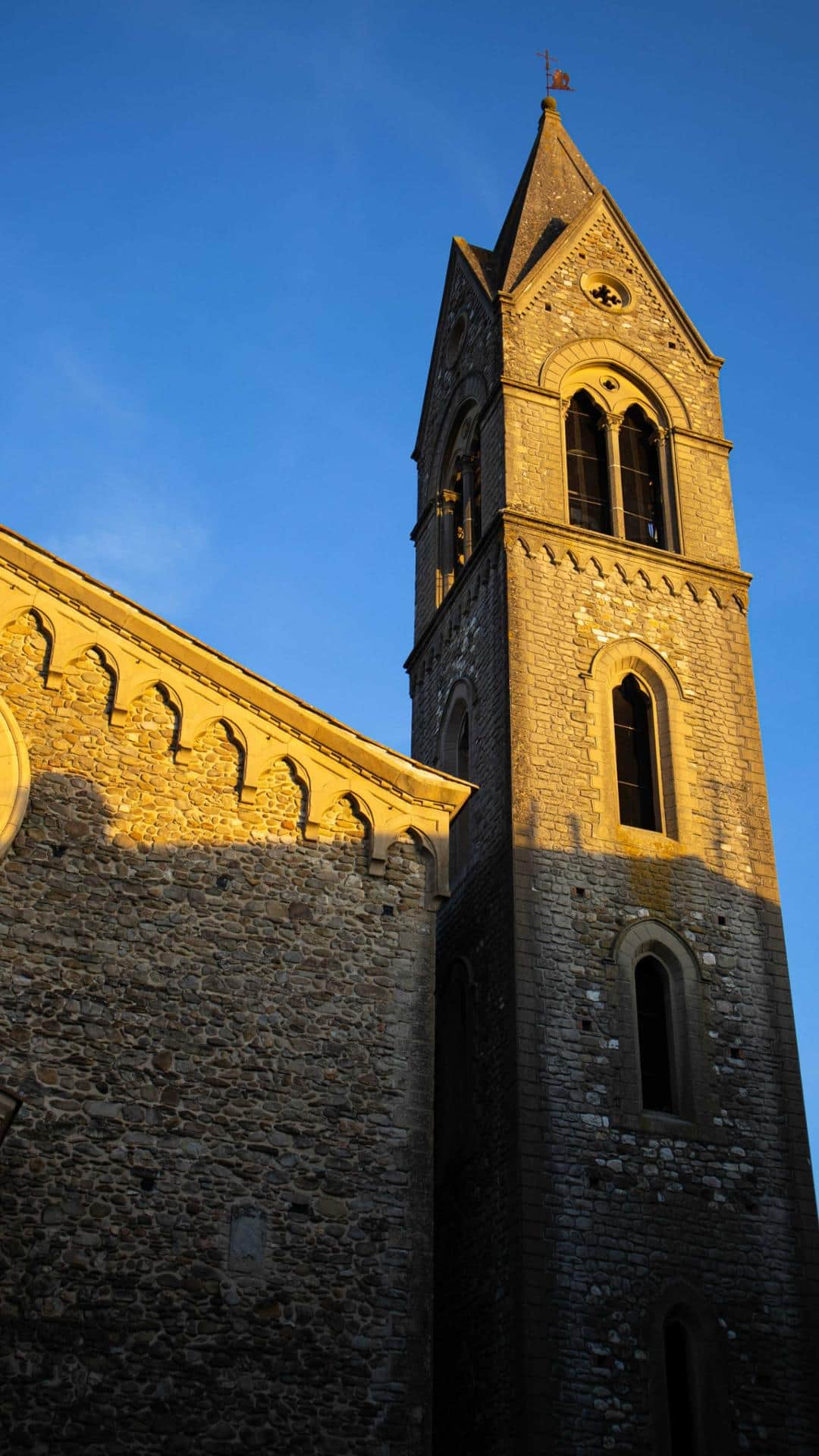
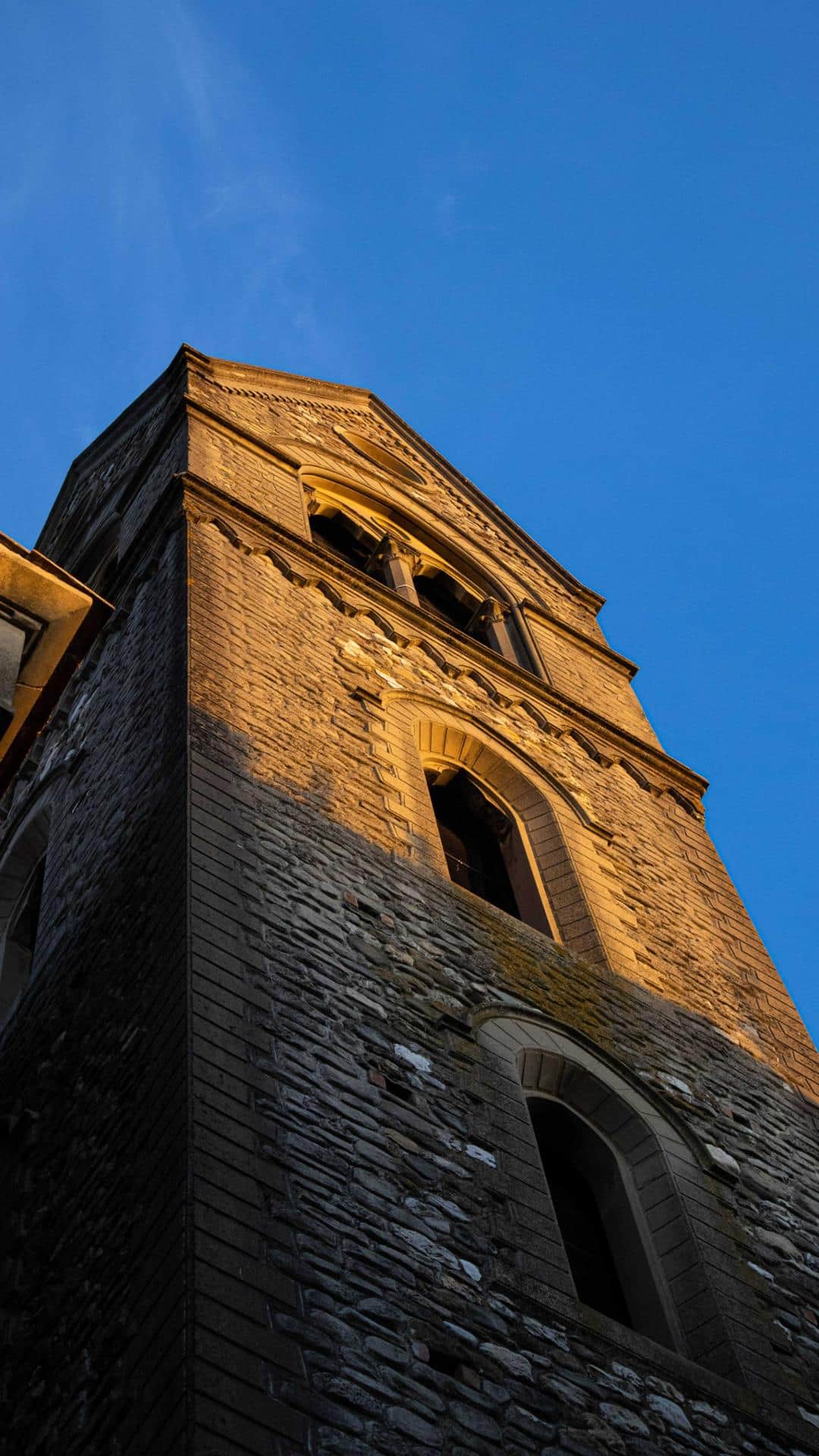
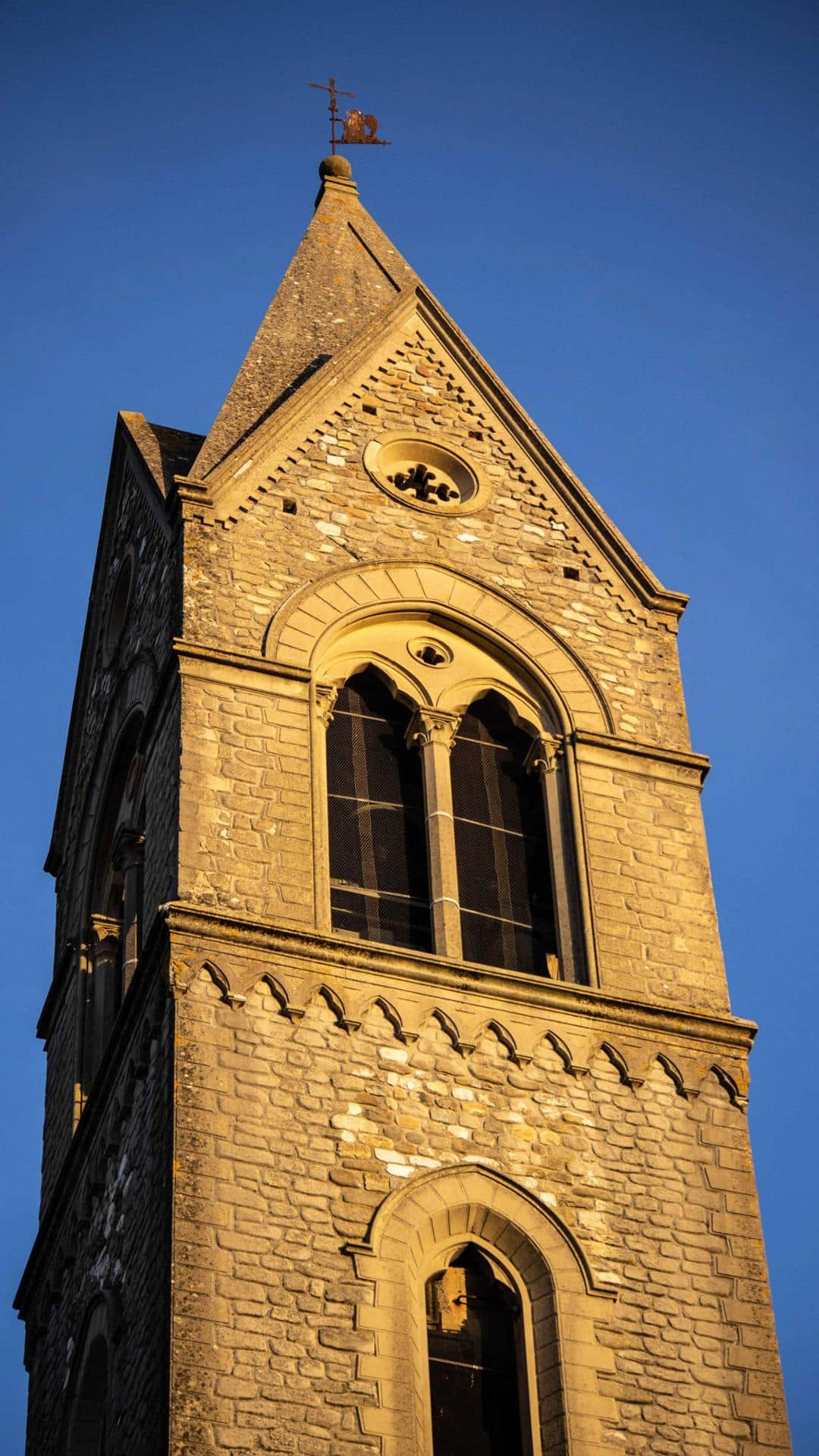
The tower bell tower, of neo-Gothic style, is cusped. Although medieval in appearance, it dates from the first half of the 20th century, when the original was demolished for the construction of the present one.
The appearance of the structure appears marked by the architectural principles of Tuscan churches of the mendicant orders, characterized by a rigorous and essential logic.
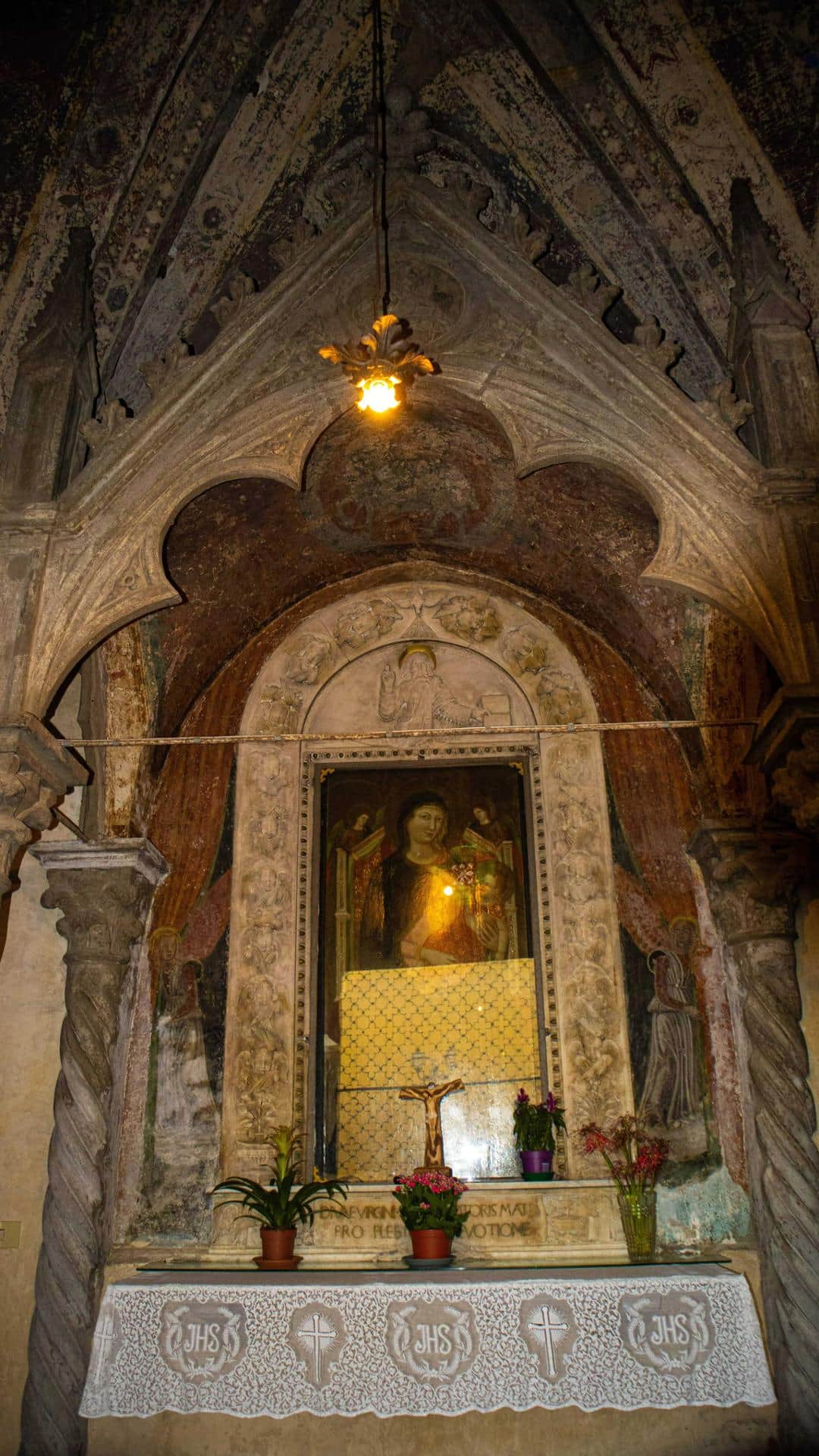
The interior is divided into a vast hall with an exposed wooden truss roof, while the tribune has three chapels with ogival arches. The central chapel features a monumental wooden crucifix, while the one on the right houses the church's most illustrious work: the tondo depicting the Madonna and Child in marble carved in bas-relief. The work is attributed to Benedetto da Maiano (1442-1497), one of the greatest interpreters of Renaissance sculpture in the second half of the 15th century.
The present appearance is reminiscent of the original, but is the result of the unraveling of the 19th-century restorations, when the ceiling was vaulted and the interior of the church completely decorated.
A door located on the right wall of the chancel leads to the sacristy.
Attached to the church is the structure of the convent, which is accessed through a door located to the right of the church façade, next to the bell tower. Past a short hallway, one reaches the rectangular-plan cloister, which has structural elements belonging to two different construction phases. The loggia that runs along the wall of the church is supported by four columns with as many capitals that appear different from each other and decorated with plant motifs and anthropomorphic and zoomorphic heads. On the other three sides, however, the capitals display an Ionic style.
Historical background:
Shortly after the birth of Scarperia (1306), even before it had a church, a convent of Augustinian friars was founded, named after St. Barnabas, patron of the new town.
The foundation of the convent, therefore, can be traced back to the years between 1324 and 1326. It became not only the religious center of Scarperia, but a true fundamental point of reference for the life of the Scarperia community. The Augustinians even devoted themselves to schooling.
The 1542 earthquake must have caused extensive damage to the Augustinian complex as well, as there are reports of expenses by the friars for restoration works.
In 1808, after nearly five centuries of activity, the Augustinian friars were removed from the convent due to Napoleonic suppressions.
Left vacant, the convent was later used as a parish seat and named after Saints Jacob and Philip.
The 1919 earthquake also caused major damage, both inside and outside, with the detachment of the church façade.
Renovations, which restored the interior to its original appearance, were carried out in the 1960s, probably in line with the dictates of the Second Vatican Council.
No related places available